
Pier Reconstruction St. Leonard MD
Ward's Marine pier reconstruction in St. Leonard MD
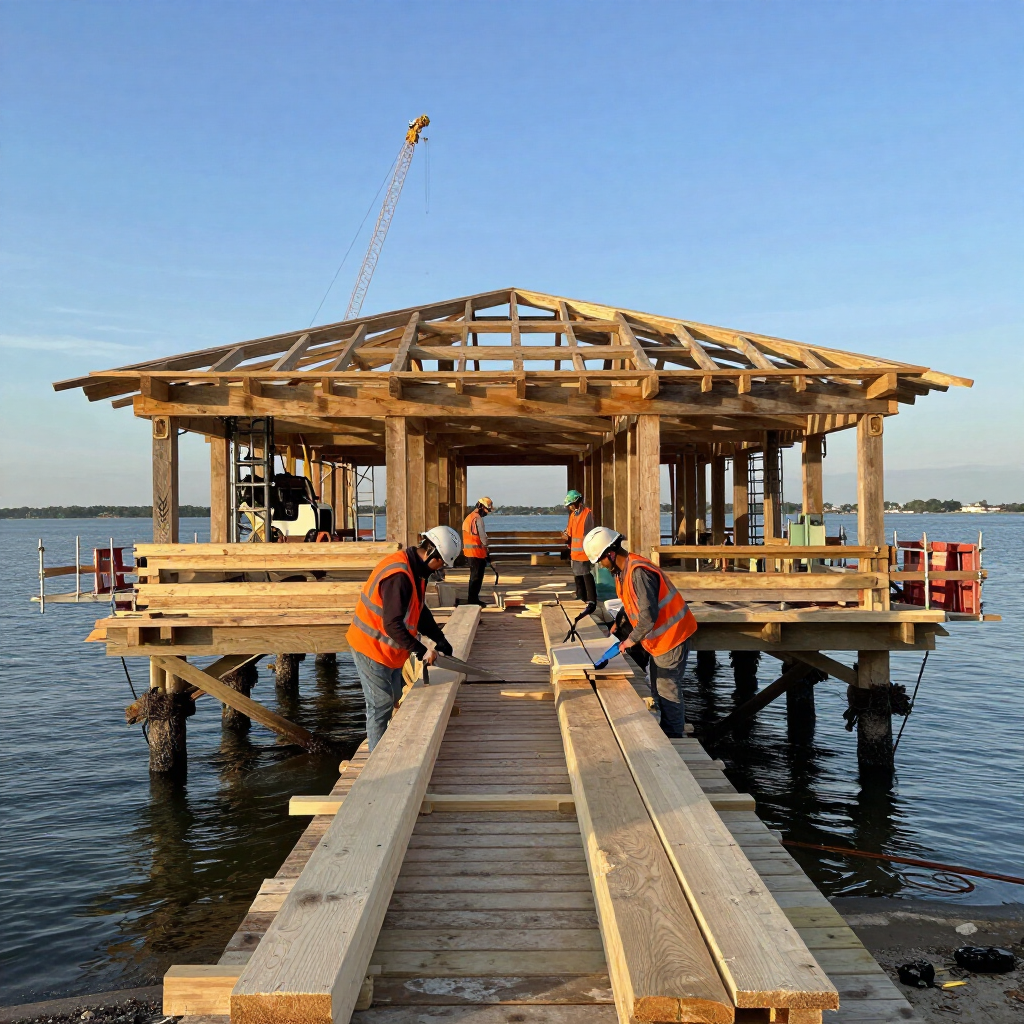
At Ward's Marine Inc., we've reconstructed piers up and down Southern Maryland for decades. We know the soil conditions in Calvert County, the quirks of the Patuxent River, and exactly what Maryland's permitting process requires before a single pile gets driven. This post walks you through everything a St. Leonard waterfront property owner should know before beginning a pier reconstruction project.
Why Pier Reconstruction Is Different From a Simple Repair
A lot of homeowners come to us hoping for a patch-up, and sometimes that's the right call. But pier reconstruction — the partial or complete replacement of an existing pier structure — is often the smarter long-term investment, especially when:
- Pilings are compromised at the mudline. Wood pilings rot from the inside out, and by the time you see surface deterioration, the structural core may already be gone. If two or more pilings show movement or soft wood at or below the waterline, it's usually more cost-effective to reconstruct than repair.
- The pier was built with older materials. Piers built before modern pressure-treating standards, or using untreated timber, won't hold a repair well. New CCA-treated or composite pilings will dramatically outlast patchwork on old wood.
- Ice or storm damage has shifted the overall structure. When a pier is racked — meaning it has been pushed laterally out of square — repairs to individual components won't address the root structural problem.
- The footprint or configuration needs to change. If you want to add a boat lift, widen the platform, extend the pier length, or add a T-head or L-head, that typically triggers a full reconstruction and permitting process regardless of the pier's existing condition.
Common Signs Your St. Leonard Pier Needs Reconstruction
Here are the red flags we see most often during inspections on Calvert County properties:
| Warning Sign | What It Usually Means |
|---|---|
| Soft, springy decking boards | Decking rot — often repairable, but investigate the stringers beneath |
| Pilings that move when pushed | Mudline rot or insufficient embedment depth — structural concern |
| Visible lean or list to one side | Piling failure or lateral ice/current pressure — likely reconstruction |
| Corroded or missing hardware | Fasteners and brackets failing — evaluate how widespread before patching |
| Gaps between decking and stringers | Stringer rot or pull-away from pilings — structural evaluation needed |
| Pier walking or shifting under foot traffic | Loss of rigidity at connections — could indicate multiple failing pilings |
Permitting for Pier Reconstruction in Maryland
This is where many waterfront homeowners get surprised. Even if you're reconstructing a pier in the exact same footprint as what's already there, Maryland law typically requires permits before work can begin. The specific permits depend on the scope of work, but for most pier reconstruction projects in St. Leonard you'll be dealing with:
Maryland Department of the Environment (MDE) — Waterway Construction Permit
Any structure built, reconstructed, or substantially altered in, on, or over tidal or navigable waters of Maryland requires an MDE Waterway Construction Permit. For most residential pier reconstructions, this is a standard application, but it does require site-specific information including pier dimensions, water depths, and a description of the work.
U.S. Army Corps of Engineers (USACE) — Section 404/10 Permit
Federal authorization is required for work in waters of the United States, including the Patuxent River and its tributaries. Many residential pier reconstructions qualify for a Nationwide Permit (NWP), which is faster than an individual permit, but it still must be verified and documented.
Calvert County Permits
Local county permits may also be required depending on the scope of construction. Ward's Marine can help you navigate what's needed for your specific property and project.
Important: Unpermitted pier reconstruction can result in stop-work orders, fines, and mandatory removal — costs that far exceed the permit fees themselves. We handle the permitting process for our clients so nothing gets missed.
The Pier Reconstruction Process: What to Expect
Every project is different, but here's the general arc of a pier reconstruction project with Ward's Marine in St. Leonard:
- Site Assessment — We visit your property, inspect the existing pier, evaluate water depths, bottom conditions, and shoreline characteristics, and discuss your goals for the reconstructed pier.
- Design & Proposal — We develop a plan that meets your needs, accounts for site conditions, and is designed to satisfy permitting requirements from the start.
- Permit Application — We prepare and submit the required MDE and USACE permit applications on your behalf. Timelines vary, but we'll give you a realistic estimate based on current agency processing times.
- Demolition of the Existing Structure — Old pilings, decking, and framing are removed. We do this carefully to avoid disturbing the shoreline or bottom habitat more than necessary.
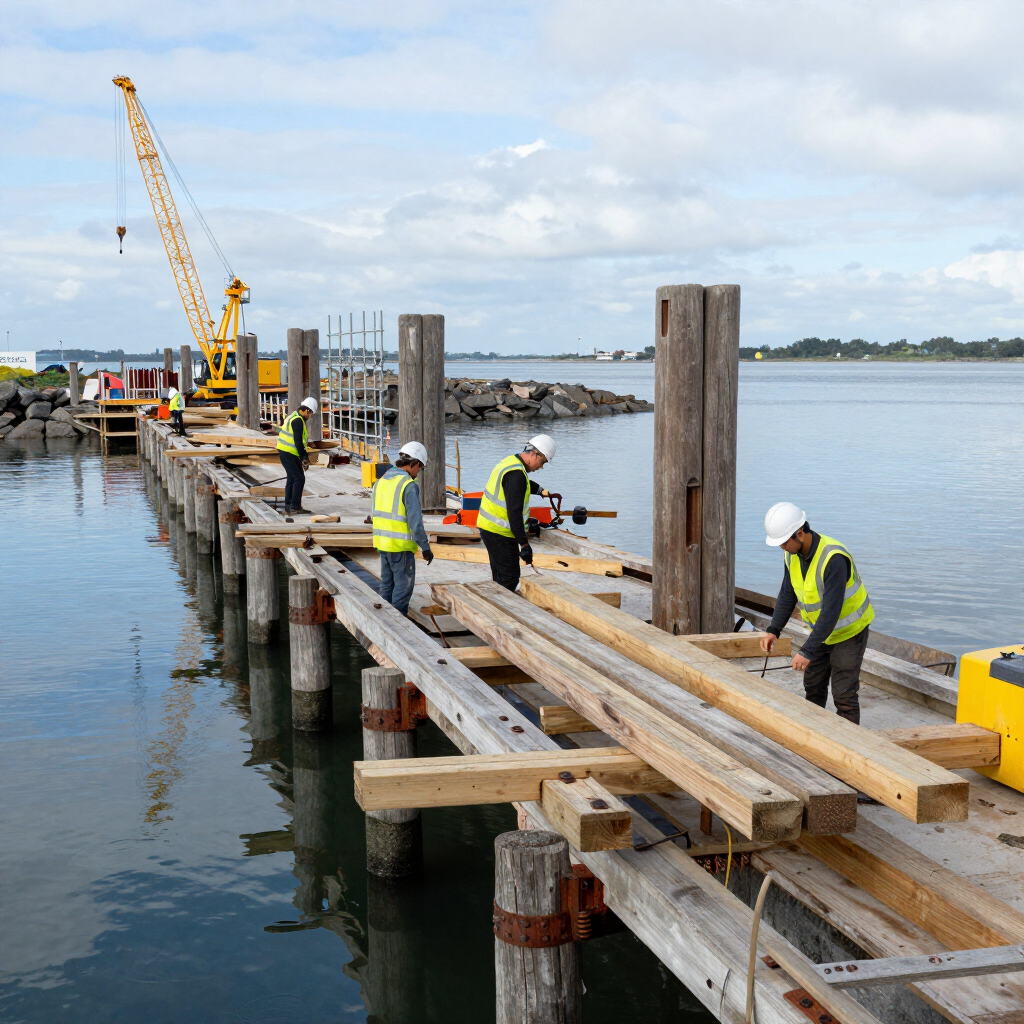
- New Piling Installation — Pilings are driven using our barge-mounted equipment to the appropriate depth for your soil conditions. Calvert County's Patuxent River shoreline often requires deeper embedment than property owners expect because of softer bottom sediments.
- Framing, Decking & Hardware — Stringers, cross-bracing, decking, and all hardware are installed. We use hot-dipped galvanized or stainless fasteners rated for marine environments — not the hardware store bolts that fail in a few years.
- Final Inspection & Walkthrough — We walk the finished project with you and ensure everything meets both your expectations and the requirements of the permits issued.
Material Choices for Pier Reconstruction in St. Leonard
One of the most important decisions in a pier reconstruction is what you build with. Here's a quick overview of the most common options and how they perform in the Patuxent River environment:
CCA-Treated Southern Yellow Pine
Still the most common piling and framing material for residential piers in Maryland. Modern CCA (chromated copper arsenate) treatment significantly improves rot resistance, but the quality of treatment varies. We source lumber from suppliers we trust and specify the retention level appropriate for contact with tidal water.
Composite Decking
Composite decking (brands like Trex or TimberTech) has become extremely popular for pier surfaces because it resists rot, splinters, and UV fading far better than wood. It costs more upfront but typically requires minimal maintenance over its lifespan. It's an excellent choice for homeowners who want a low-maintenance pier.
Fiberglass & Aluminum
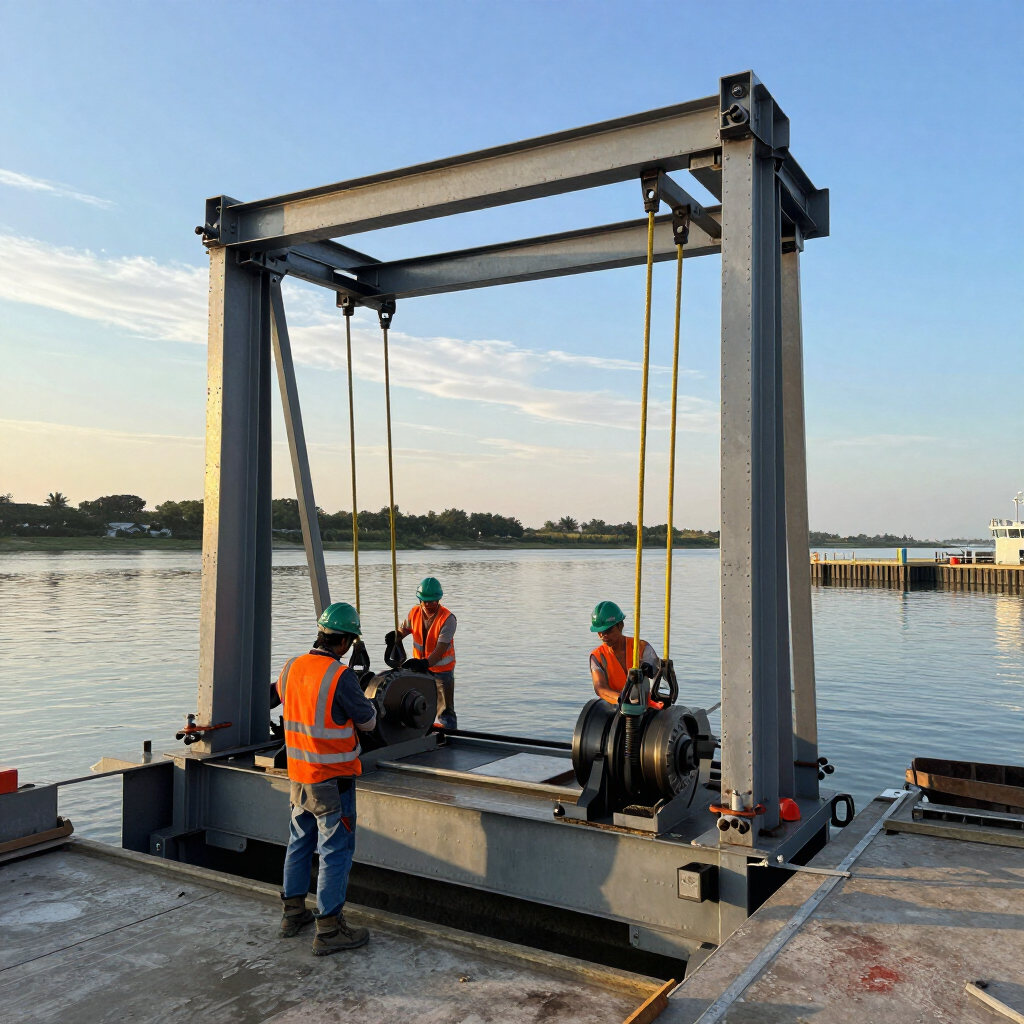
For certain applications — particularly floating docks and boat lifts — aluminum framing or fiberglass grating may be appropriate. These materials eliminate wood rot entirely but have higher upfront costs and specific installation considerations.
How Long Does Pier Reconstruction Take?
Permitting is usually the longest part of the process. MDE and USACE permits for straightforward residential pier reconstructions can take anywhere from 60 to 120+ days depending on workload and whether additional review is triggered. Once permits are in hand, the physical construction of a standard residential pier typically takes one to three days of on-water work, depending on size and complexity.
Planning ahead is important: if you want your pier ready for the summer boating season, contact us in winter or early spring to allow time for permitting.
Why St. Leonard Property Owners Choose Ward's Marine
We're not a national franchise or a general contractor who occasionally does waterfront work. Ward's Marine is a Southern Maryland marine contractor — this is all we do. We operate our own barge fleet, which means we're not dependent on subcontractors to access your waterfront. We know the tidal patterns, the bottom conditions, and the permit requirements in Calvert County because we've been working here for decades.
When you hire Ward's Marine for your pier reconstruction, you're working directly with experienced marine construction professionals who have done this work on properties just like yours — not with a salesperson who hands the job off to a crew you've never met.
Ready to talk about your St. Leonard pier? We're happy to visit your property, assess the existing structure, and give you an honest recommendation — whether that's a repair, a reconstruction, or something in between.
Request a Free Consultation →Or call us at 410-326-4116
Ward's Marine Inc. | Solomons, MD | Serving Calvert, St. Mary's & Charles County | wardsmarineinc.com
FAQs
Do I need a permit if I'm replacing my pier in the same footprint?
Generally yes. Maryland does not exempt like-for-like replacements from the permitting requirement, particularly for tidal waters like the Patuxent River. There is a maintenance exemption for minor repairs, but reconstruction — replacing pilings, framing, or significant portions of decking — almost always requires MDE review.
How much does pier reconstruction cost in St. Leonard?
It varies significantly based on pier length, width, material selection, water depth, and bottom conditions. We don't publish fixed prices because a 60-foot pier in shallow water with firm bottom is a fundamentally different project than a 120-foot pier in soft Patuxent River sediment. Contact us for a site-specific quote — we're happy to come out and take a look.
Can I extend my pier at the same time?
Yes, and many homeowners find it efficient to address an extension while the pier is already being reconstructed. Extensions do require additional permitting coverage, but since we're already in the process, the incremental effort is minimal compared to doing it as a separate project later.
Does Ward's Marine serve St. Leonard specifically?
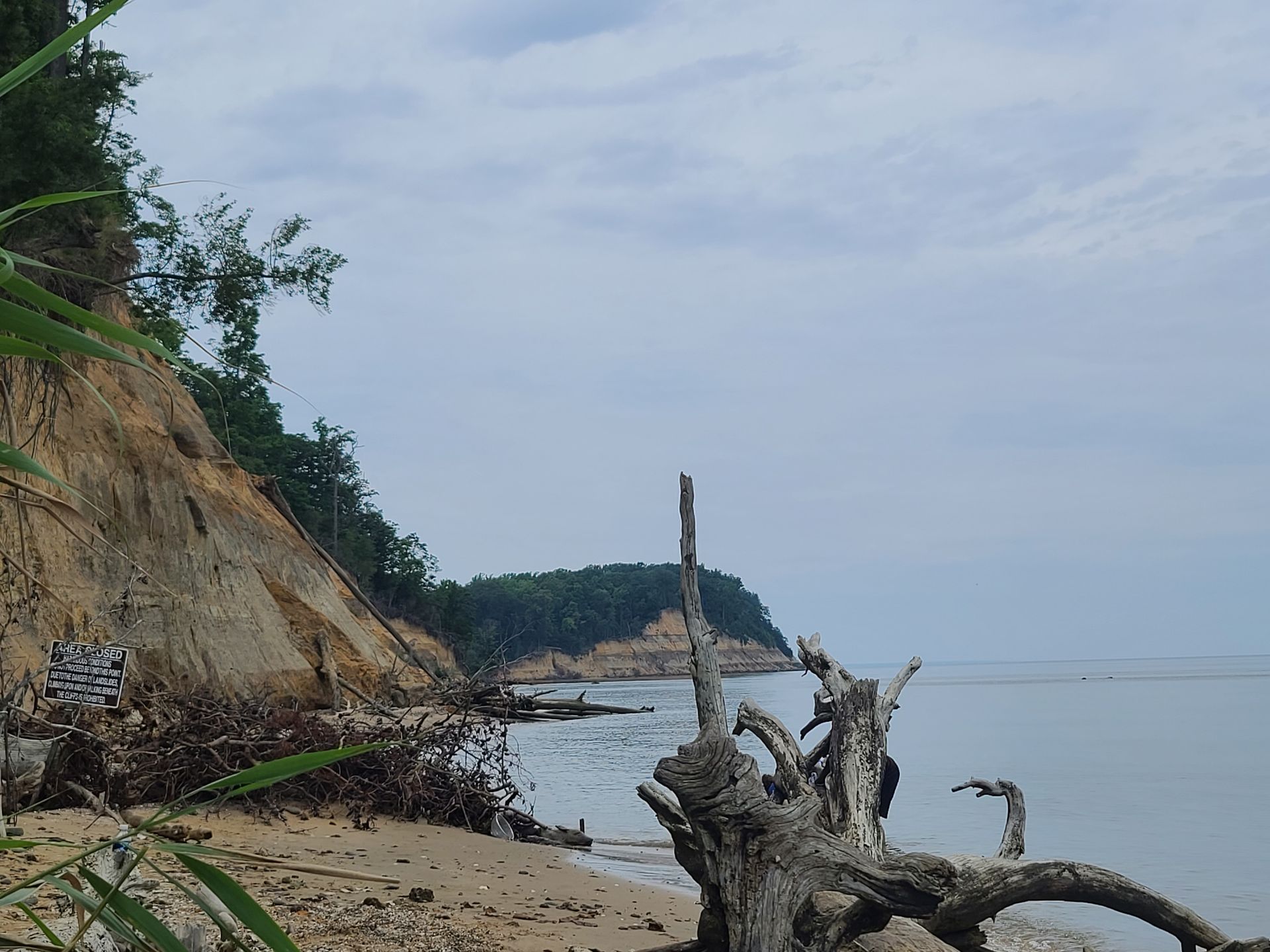
Absolutely. St. Leonard is squarely in our service area. We work throughout Calvert County along the Chesapeake Bay, Patuxent River, and the numerous creeks and coves in between, including St. Leonard Creek, Hunting Creek, and beyond.
What's the difference between a pier, a dock, and a wharf?
These terms are often used interchangeably in conversation, but technically a pier extends perpendicular from shore, a dock is typically a platform at the end of a pier, and a wharf runs parallel to the shore. For permitting and construction purposes, we treat them all similarly — what matters is the size, location, and use of the structure.