
Leonardtown sits on the western shore of Breton Bay — a sheltered tidal tributary that drains into the Potomac just a few miles south. If you own waterfront property on the Bay or one of its fingers, a boat lift might be one of the smartest investments you can make in that property. Keeping your hull out of the water dramatically reduces marine growth, corrosion, and wear — especially in the brackish tidal environment that most Leonardtown waterfront lots sit on.
But boat lifts aren't a plug-and-play purchase. The right lift for your property depends on your water depth, tidal range, bottom substrate, boat size, and the configuration of your existing pier. And in St. Mary's County, any new lift on a tidal waterway requires permits. This guide walks you through the whole picture.
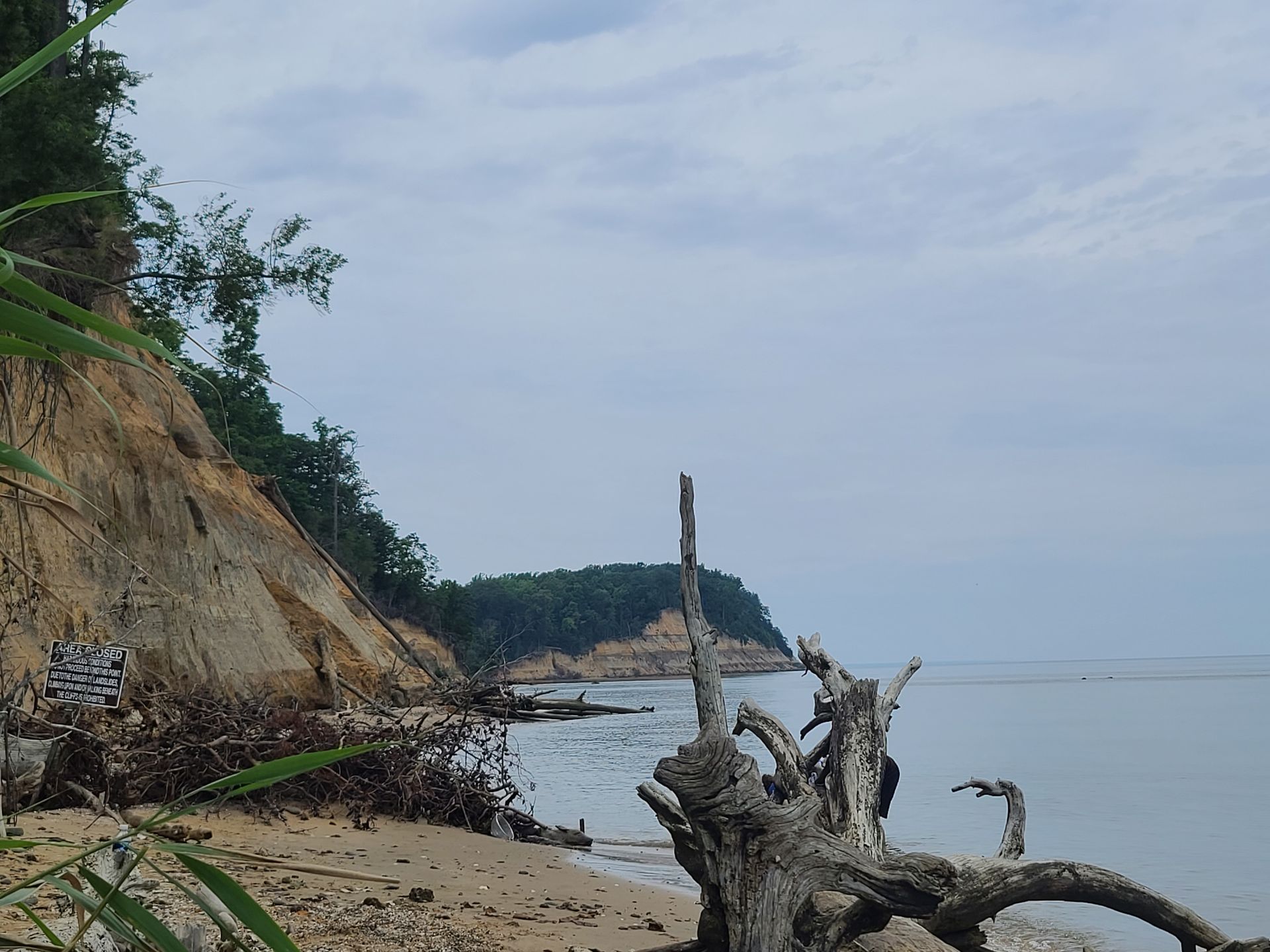
Breton Bay is a relatively shallow, sheltered estuary with a tidal range of roughly 1 to 1.5 feet. Its bottom is often soft silt or clay, especially in the upper reaches near Leonardtown's shoreline. Those two factors — tidal swing and substrate — directly influence which lift types will perform reliably on your property versus which will give you problems.
The Four Main Types of Boat Lifts
Most residential boat lifts fall into one of four categories. Each has a profile of water conditions and boat types it's best suited for.
Mounts directly to your pier pilings or to four freestanding posts. A cable-and-pulley system raises the cradle straight up. Handles tidal fluctuation well, accommodates most boat sizes, and works in soft-bottom conditions. The workhorse of Chesapeake Bay waterfront properties.
Same vertical travel as a 4-post, but powered by a hydraulic system rather than cables. Smoother operation, push-button convenience, and components kept above the waterline for reduced corrosion exposure. Capacities up to 30,000 lbs for larger vessels.
Operates in as little as 16–24 inches of water by swinging the cradle up in a forward arc rather than lifting vertically. Excellent for shallower Breton Bay properties where the end of the pier doesn't reach deeper water. Less ideal where tidal swings exceed 2 feet.
Compact freestanding or dock-mounted units designed for personal watercraft and small boats up to roughly 1,500 lbs. Low-profile, often manual or battery-powered. A cost-effective solution if you're storing a Jet Ski or small outboard alongside a larger vessel on the same pier.
Which Lift Is Right for Breton Bay?
For most Leonardtown and Breton Bay waterfront properties, a piling-mounted 4-post vertical lift is the most practical choice. The tidal range here is manageable but real — vertical travel handles it better than a fixed cantilever design. The soft silt bottom common in the upper Bay also favors driven-piling mounts over freestanding legs, which can shift in softer substrate over time.
If your pier ends in shallow water and you're having trouble getting enough depth for a standard 4-post, a hydraulic cantilever becomes worth considering — particularly if your water depth stays relatively consistent (not subject to seasonal drawdown). Your contractor should take current depth soundings at the pier end before recommending a lift configuration.
| Lift Type | Min. Water Depth | Tidal Tolerance | Soft Bottom? | Typical Capacity |
|---|---|---|---|---|
| 4-Post Vertical | 3–4 ft at MLW | High | Yes (piling mount) | 4,000–20,000 lbs |
| Hydraulic Vertical | 3–4 ft at MLW | High | Yes (piling mount) | 4,000–30,000 lbs |
| Hydraulic Cantilever | 1.5–2 ft at MLW | Moderate | Firm bottom preferred | 3,900–10,000 lbs |
| PWC / Small Craft | 1–2 ft at MLW | High | Yes | 750–1,500 lbs |
St. Mary's County Permitting for Boat Lifts
In Maryland, any boat lift added to a pier on tidal water is a regulated structure. That means you need permits before installation begins — not after. Here's what the approval pathway looks like in St. Mary's County.
Maryland Department of the Environment (MDE)
Adding a lift to an existing, permitted pier typically qualifies for an expedited license through MDE's Wetlands and Waterways Program. MDE maintains a specific streamlined review track for fixed private piers and associated structures including boat lifts and hoists. You'll need to document the existing pier's permit status and submit a plan showing the lift's placement on the structure. If the pier itself was never properly permitted, that has to be resolved as part of the process.
Army Corps of Engineers
Boat lift additions to existing permitted piers generally fall under the Maryland State Programmatic General Permit (MDSPGP-6) and don't require a separate individual Corps permit — but the application still goes through MDE, which coordinates Corps authorization as part of the joint federal-state process.
St. Mary's County
County approval is required for piers and structures at or above mean high water, and the county's Zoning Ordinance sets specific rules for boat lifts on residential piers:
- A single pier is allowed a maximum of four boat lifts or hoists.
- Lifts and all pier structures must maintain a 25-foot setback from the extended property line. This can be reduced if you obtain a signed, notarized affidavit from the adjacent property owner.
- No new boathouses (enclosed structures over the water) are permitted at residential piers — a canopy over a lift is generally approvable; enclosed walls are not.
Installing a boat lift without permits in St. Mary's County can result in a stop-work order, a requirement to remove the unpermitted structure at your expense, and complications when you go to sell the property. Permit documentation transfers with the deed and is reviewed by buyers' attorneys as part of waterfront real estate transactions.
SAV — Submerged Aquatic Vegetation
One factor that can complicate any Breton Bay pier or lift project is the presence of submerged aquatic vegetation. Breton Bay supports SAV beds, and both MDE and the Army Corps require that lift placement be designed to minimize shading over SAV. If SAV is present near your pier end, your contractor needs to flag it before finalizing the lift's position. In some cases, this affects whether a fixed or floating configuration is preferable.
The Installation Process
On-Site Assessment
Ward's Marine visits your property to take water depth readings at mean low water at the pier end, assess bottom conditions, inspect existing pier structure and piling condition, and measure setbacks from property lines. This determines which lift types will actually work and whether the pier's current pilings can support a lift mount or if new posts are needed.
Lift Selection and Sizing
The lift is sized to your vessel — not just current weight, but wet weight with a full fuel tank, gear, and a safety margin. Undersizing a lift is one of the most common and costly mistakes waterfront homeowners make. We'll also discuss power source (shore power vs. battery) and whether a canopy makes sense for your use patterns.
Permit Application
We prepare and submit the MDE joint application on your behalf, including a scaled drawing of the lift placement on the existing pier. Expedited review for lift additions to permitted piers moves faster than new pier construction — plan for 45–90 days in most cases, plus concurrent county review.
Piling Installation (If Required)
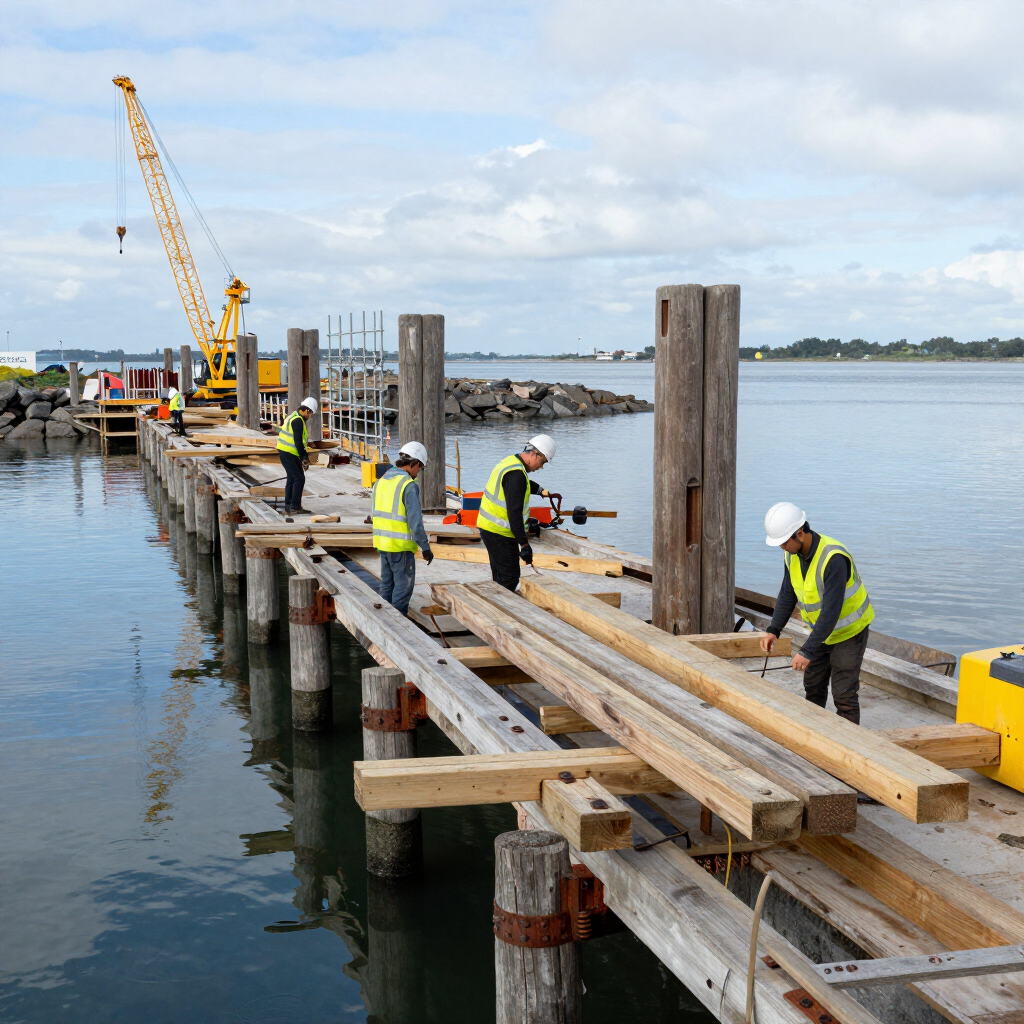
If your existing pier pilings aren't positioned or strong enough to support the lift mount, additional pilings are driven first. Ward's Marine operates its own barge and pile-driving equipment — no subcontracting required for this step.
Lift Fabrication and Delivery
Most residential lift systems are manufacturer-built to the specified capacity and arrive as a kit for installation. Delivery timing varies by manufacturer and season — spring is peak demand, so ordering early matters if you have a target date.
Installation and Wiring
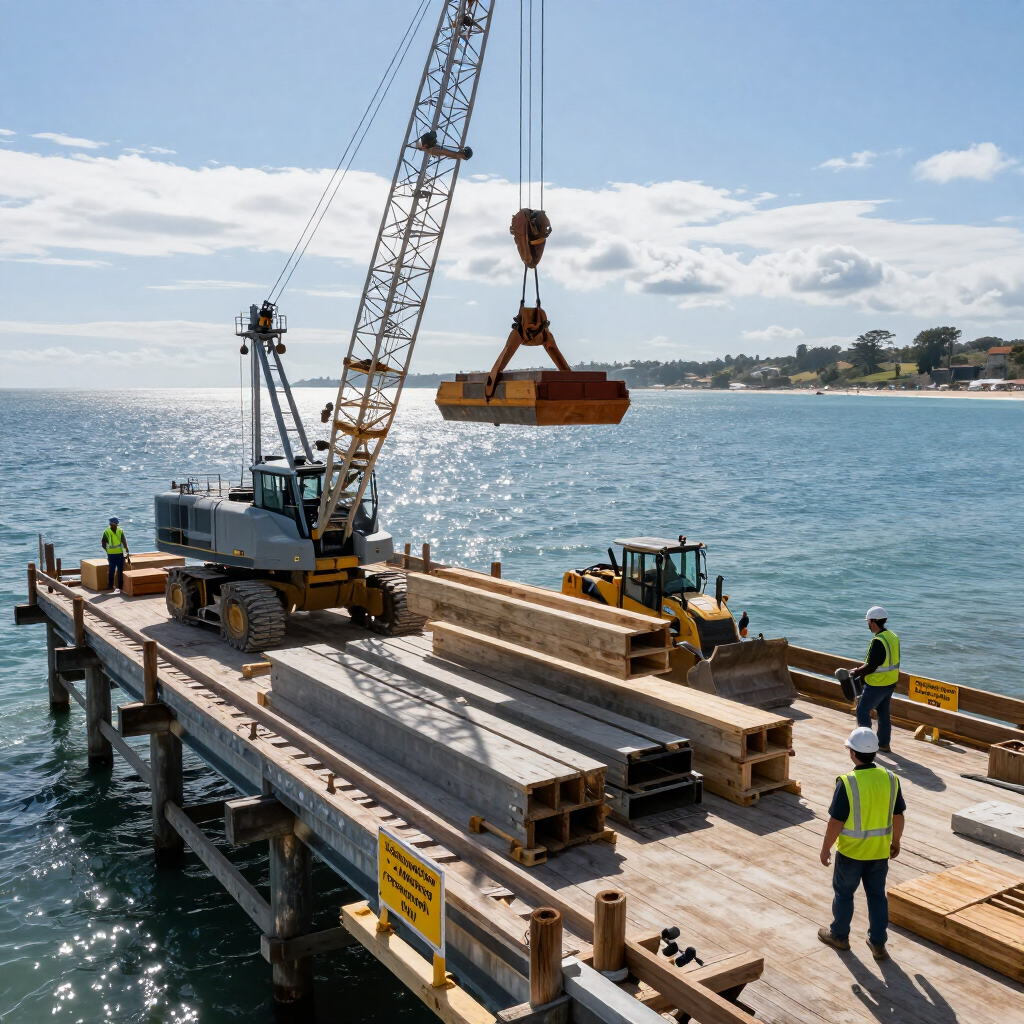
The cradle, frame, and cable or hydraulic system are assembled and mounted. If the lift is electric, a licensed electrician connects it to shore power at the pier's electrical pedestal. We then lower the boat onto the lift and adjust the bunks and cable tension to set the proper trim and fit.
Walk-Through and Handoff
We walk you through operating the lift, show you the seasonal maintenance points, and give you copies of all permits and installation documentation. Keep these on file — they're part of your property's waterfront record.
What Does a Boat Lift Cost in Leonardtown?
Installed cost depends on lift capacity, type, site conditions, and whether new pilings are needed. Rough ranges for St. Mary's County waterfront projects in 2025:
- PWC / small craft lift (installed):$3,000–$6,000
- 4-post vertical lift, 7,000–10,000 lbs (installed):$8,000–$18,000
- 4-post vertical lift, 10,000–20,000 lbs (installed):$15,000–$28,000
- Hydraulic vertical lift (installed):$20,000–$45,000 depending on capacity
- Additional pilings (if needed):$1,500–$3,000 per pile, driven
- Electrical connection:$800–$2,500 depending on pier wiring condition
- Permitting: State and county fees vary; budget $500–$1,500 for application costs
These are reference ranges only — the only accurate number for your project comes from a site visit. Factors like pier access, bottom conditions, and whether your existing pilings are sound can move a project significantly in either direction.
Many Leonardtown homeowners add a canopy to their lift at the same time as installation. A canopy extends lift life by reducing UV degradation on cradle components and protects the boat's upholstery and electronics between uses. It's much more cost-effective to install a canopy mount during initial installation than to come back and add one later.
Frequently Asked Questions
Can I add a boat lift to my existing pier without a new pier permit?
Yes, in most cases. Adding a lift to a properly permitted existing pier is treated as a modification, not a new structure, and qualifies for MDE's expedited review track. The key requirement is that the existing pier itself was built with proper authorization. If your pier pre-dates the permitting requirements or was built without permits, that needs to be addressed first.
How do I know if my pier pilings can support a boat lift?
A visual inspection by an experienced marine contractor can assess piling condition — checking for rot, marine borer damage, and structural integrity. If the pilings are sound and positioned correctly for the lift design you want, no additional piling work is needed. If they're marginal or in the wrong location, additional piles are driven before the lift goes in. We assess this during the initial site visit.
How much water depth do I need at the end of my pier for a lift?
For a standard 4-post vertical lift, you generally want at least 3 to 4 feet of water at mean low water at the point where the lift will sit. If your pier end is shallower, a hydraulic cantilever may operate in as little as 18 to 24 inches of water — but this depends on the lift model and your boat's draft. Depth soundings are taken during the assessment visit.
Do I need electricity at my pier for a boat lift?
Electric lifts require a shore power connection at the pier. Many Southern Maryland piers already have electrical pedestals; if yours doesn't, an electrician runs conduit from the house or a junction box at the pier head. Battery-powered hydraulic systems are also available and eliminate the need for pier wiring entirely — though they require battery charging and maintenance.
What maintenance does a boat lift require?
At minimum: inspect and lubricate cables and pulleys seasonally, check cradle bunk alignment, and flush the drive mechanism with fresh water after extended use in brackish conditions. Electric motor housings should be inspected annually for corrosion. Hydraulic systems need annual fluid and line checks. Most lift manufacturers recommend a professional inspection every 2–3 years depending on use intensity.
Can a boat lift add value to my Leonardtown waterfront property?
Yes — a properly permitted, well-maintained boat lift is a meaningful amenity for waterfront buyers in St. Mary's County. Waterfront real estate buyers here are often boaters, and a functioning lift with documented permits saves the next owner the time and cost of permitting and installation themselves. Unpermitted lifts, by contrast, can become a negotiating liability at closing.
Can Ward's Marine handle both the permit and the installation?
Yes. We manage the full project — on-site assessment, permit application submission, piling work if needed, lift installation, and electrical coordination. You don't have to navigate the MDE or county permit process yourself.
Ready to Get Your Boat Out of the Water?
Ward's Marine Inc. has installed boat lifts throughout Leonardtown, Breton Bay, and greater St. Mary's County. We operate our own barge and pile-driving equipment and manage permitting in-house. Call us or reach out online for a free on-site estimate — we'll come to your pier, take depth readings, and tell you exactly what will work.
Get a Free Estimate