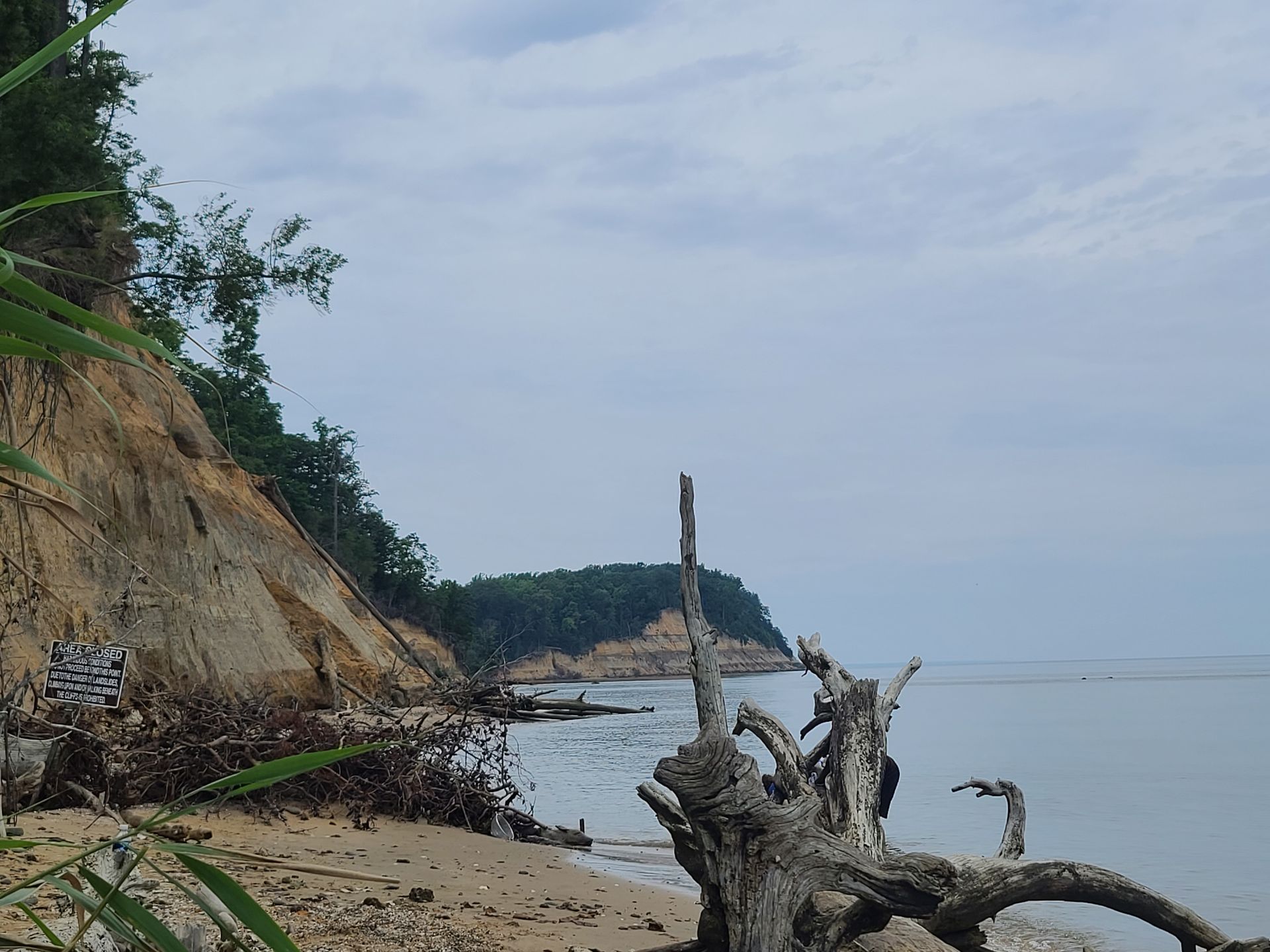

If your home sits along the Potomac River in Charles or St. Mary's County, you already know what the view is worth. But a lot of waterfront homeowners still find themselves staring at the water from the bank, wondering what it actually takes to put a pier out there.
The Potomac is one of the most iconic rivers on the East Coast — and one of the most regulated. Building a pier here involves a layer of federal, state, and county oversight that can feel overwhelming if you've never done it before. But with the right contractor and a clear understanding of the process, it's very doable. This guide walks you through everything you need to know.
Maryland owns the Potomac River all the way to the Virginia shore — a boundary established by the 1632 Maryland Charter. That means the riverbed under your pier, even if you're looking at Virginia across the water, is Maryland's jurisdiction. All permits go through Maryland agencies, not Virginia's.
Do You Have Riparian Rights?
Before anything else, confirm that your property has riparian rights. Riparian rights are the legal privileges that come with owning land that directly borders a body of water. In Maryland, those rights include access to the water and the ability to apply for a private pier extending from your shoreline into the river.
A few key points about how they work:
- They transfer with the deed. If you bought the property with waterfront access, you most likely have riparian rights — but verify this with your deed and a surveyor if there's any doubt.
- They are a right to apply, not a guarantee. Riparian rights give you standing to submit a permit application. Approval depends on water depth, environmental conditions, navigational impact, and other factors.
- They can't encroach on neighbors. Your pier can't extend into the riparian zone of the property next door. This matters especially in coves or narrow reaches of the river.
- HOA and subdivision restrictions may apply. Some waterfront communities established after 1990 require community piers rather than individual ones. Review your HOA documents before assuming a private pier is an option.
If you're unsure about your riparian status, a pre-application conversation with Maryland Department of the Environment (MDE) or a licensed marine contractor familiar with the Potomac can clarify your situation before you invest in drawings and fees.
The Permitting Process for Potomac River Piers
This is where most homeowners hit their first wall — not because the process is impossible, but because it involves multiple agencies with separate timelines. Here's how it breaks down.
| Agency | What They Review | Typical Timeline |
|---|---|---|
| Maryland Dept. of the Environment (MDE) | Tidal wetlands license or permit; wetland impact; water quality; joint federal/state application | 60–120 days |
| U.S. Army Corps of Engineers (Baltimore District) | Section 10 navigable waters review; Section 404 fill authorization; MDSPGP-6 coordination | Concurrent with MDE |
| Charles or St. Mary's County | County pier permit; Critical Area buffer compliance; any structure at or above mean high water | 2–6 weeks |
| Maryland Board of Public Works | Required for certain larger structures or those over State-owned wetlands | Varies by project |
Construction cannot begin until all required permits are in hand. Starting work before approvals are issued can result in stop-work orders, fines, and mandatory removal of unpermitted structures at your expense.
The Joint Federal/State Application
For most residential Potomac River piers, you'll file a single Joint Federal/State Application through MDE. This triggers review by both MDE and the Army Corps of Engineers simultaneously, which saves time. The application requires a site survey, a scaled drawing of the proposed pier, water depth soundings, and a description of the project.
Smaller piers that meet the design thresholds outlined in the Maryland State Programmatic General Permit (MDSPGP-6) often qualify for streamlined Category A review. Larger or more complex structures may require Category B review, which involves more scrutiny and a longer timeline. Your contractor can tell you which category your project likely falls into before you submit.
The Critical Area
All land within 1,000 feet of the mean high water line on the Potomac is part of Maryland's Critical Area. This triggers additional rules around vegetation disturbance, buffer setbacks, and impervious surface. Even if your pier footprint is entirely over water, shoreside access construction — a walkway, parking pad, or ramp — may implicate Critical Area regulations. Mitigation for disturbance above mean high water is typically required at a 1:1 ratio.
Pier Design: What Works on the Potomac
The Potomac is a wide, tidal river with more boat traffic, stronger currents, and wider fetch than most of the creeks and coves that Ward's Marine typically builds on. That changes some design decisions.
Fixed vs. Floating
The Potomac's tidal range in Southern Maryland averages about 1.5 to 2 feet. That's manageable, but it still affects whether a fixed pier will consistently have usable water depth at the end. Many Potomac homeowners opt for a fixed main structure with a floating dock at the terminus — giving you the stability of a permanent pier with the tide-adaptive access of a float.
Floating structures must be designed to stay afloat at all tidal stages — regulators require that they not rest on the bottom substrate at low water, which may push the float into deeper water and affect pier length.
Length and Depth
Maryland's general guidance allows residential piers to extend up to 300 feet into tidal waters like the Potomac, but the practical limit is usually driven by where navigable depth exists. You'll want at least 3–4 feet of water at mean low water at the pier's end to accommodate typical watercraft. A pre-application depth survey along your proposed pier alignment is money well spent — it tells you exactly how far you need to go and can save you significant redesign costs later.
Aux Structures: T-Heads, L-Heads, and Finger Piers
Platforms at the end of the main pier are limited to 200 square feet total (not counting the main pier section they attach to). You may include up to two three-foot-wide finger piers. These limits apply to the entire pier as a project — not just the new work — so if you're adding to an existing structure, the total of old and new counts against the cap.
Materials
Treated lumber is still widely used for residential pier framing, but composite decking and fiberglass grating have become increasingly popular on the Potomac — especially for the walking surface. Composites resist moisture absorption, UV fade, and the foot traffic of a working waterfront better than wood decking over time. Pilings are typically driven timber (Southern Yellow Pine, CCA-treated) or steel pipe depending on the substrate and load requirements.
Adding a boat lift to a new Potomac pier requires that the lift be positioned and designed to minimize shading of submerged aquatic vegetation (SAV). The Army Corps and MDE pay close attention to SAV impact on the Potomac. If SAV beds are present near your shoreline, your contractor should flag this during the design phase and account for it in the permit drawings.
The Construction Process, Step by Step
Site Assessment and Survey
A licensed marine contractor visits your property, surveys the shoreline conditions, takes depth readings along the proposed pier alignment, notes any wetland vegetation, and assesses access for equipment. This shapes the design and permit application.
Design and Drawing Preparation
A scaled site plan is prepared showing the pier layout, dimensions, water depths, mean high and low water lines, and any auxiliary structures. This drawing is submitted with the permit application and must meet MDE and Army Corps standards.
Permit Submission and Review
The joint application is submitted to MDE (which coordinates the Army Corps review), and a separate county permit is filed. Ward's Marine manages the permitting process on your behalf, responding to agency requests for additional information and tracking approval status.
Piling Installation
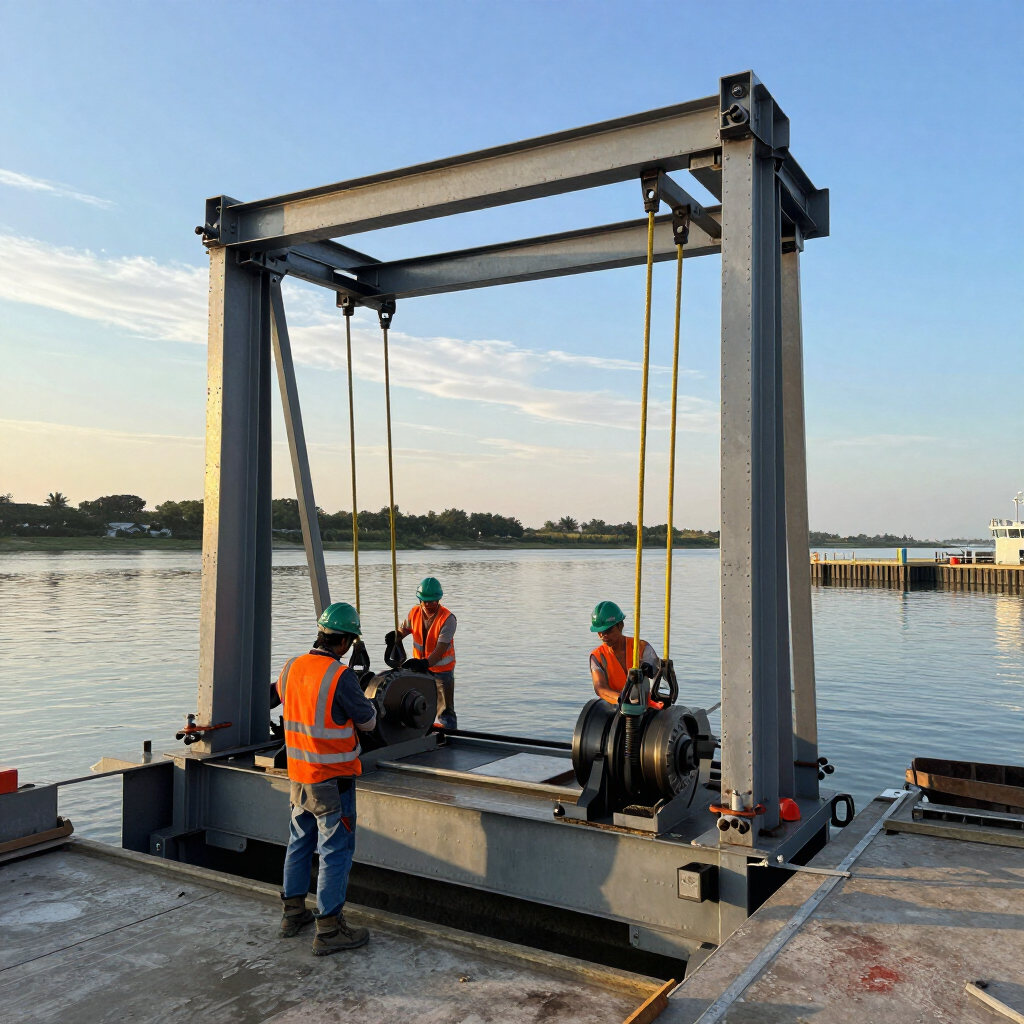
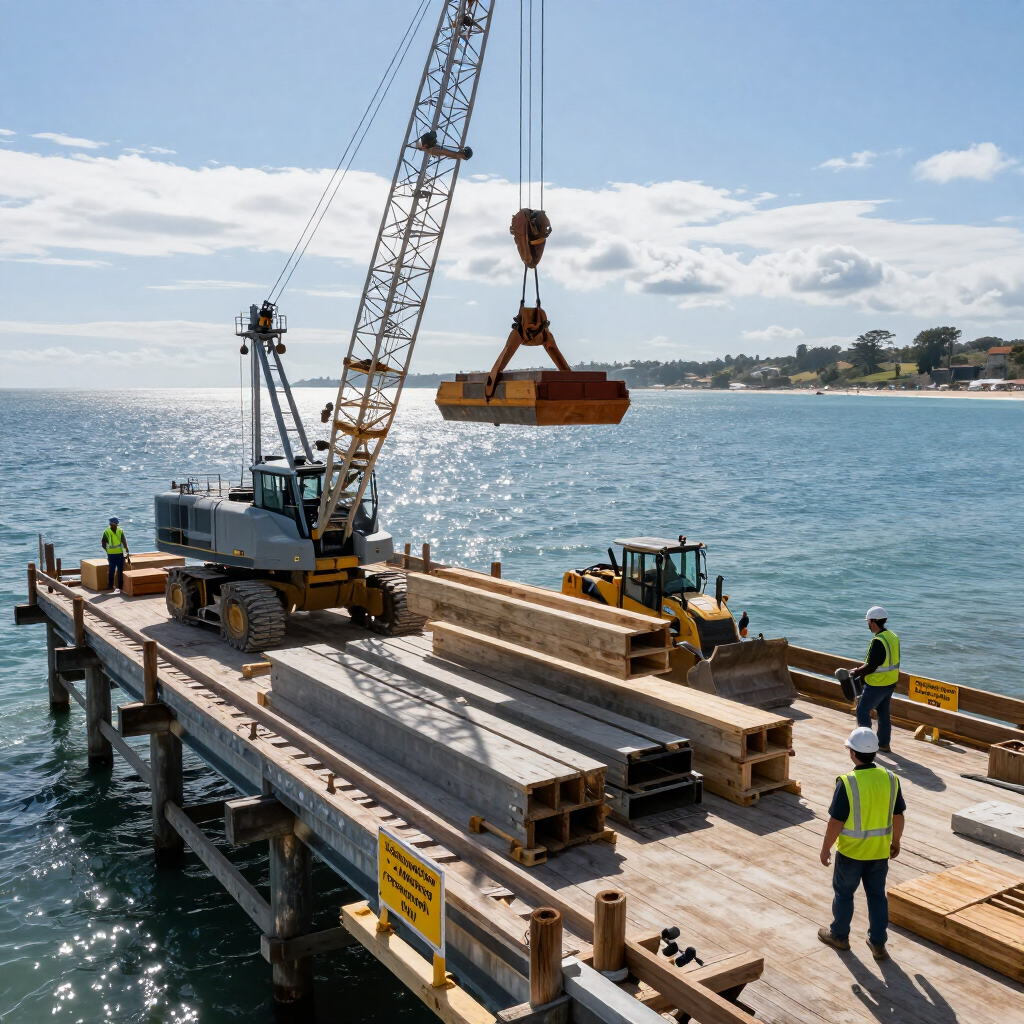
Once permits are approved, the barge goes in. Pilings are driven to the engineered depth using a hydraulic hammer. On the Potomac, barge access is typically straightforward — one of the advantages of building on a main stem river versus a narrow tidal creek.
Framing and Decking
Stringers, joists, and decking are installed. Electrical conduit is roughed in if lighting or a shore power pedestal is included in the project. Any floating dock is installed and connected last.
Final Inspection
Some permits require a post-construction inspection or a compliance sign-off before the structure is placed into service. Keep copies of all permits and approval letters on file — they'll be needed if you ever sell the property or apply for future modifications.
Cost Factors for a Potomac River Pier
Pier costs vary widely depending on length, materials, site conditions, and auxiliary structures. On the Potomac, a few factors tend to push costs higher compared to sheltered creek sites:
- Longer reaches. Open river properties often require longer piers to achieve navigable depth than a sheltered cove would.
- Structural requirements. Wider fetch and occasional boat wake means framing needs to be built to handle more lateral load.
- Substrate variability. The Potomac riverbed can include soft silt, clay, and sand — driving depth and pile requirements can vary significantly within a short stretch.
- Permitting complexity. Projects that fall outside Category A thresholds require more engineering and a longer permitting timeline.
As a rough reference, residential pier projects in Southern Maryland commonly range from $25,000 to $80,000 or more depending on length and configuration — but the only reliable number is one based on your specific site. We're happy to come take a look and give you an honest estimate.
Frequently Asked Questions
Can I build a pier if I'm on the Virginia side of the Potomac River?
Maryland actually owns the Potomac River to the low water mark on the Virginia shore under its original 1632 charter. If you have a home on the Maryland side looking across at Virginia, your permits still run through Maryland agencies — MDE and the Army Corps Baltimore District.
How long does the permitting process take?
Plan for 90 to 180 days for state and federal review under typical conditions, plus a few weeks for county approval (which can often run concurrently). Incomplete applications or projects that trigger additional environmental review can take longer. Submitting a complete, well-prepared application with accurate drawings and depth data is the best way to avoid delays.
Do I need a pre-application meeting with MDE?
For most standard residential pier projects, a pre-application meeting is not required. However, for projects near sensitive habitats — submerged aquatic vegetation, tidal wetlands, or areas with known resource concerns — a pre-application consultation with MDE can help you design around potential issues before you invest in formal drawings.
Can I include a covered boathouse on my new pier?
New boathouses over State or private wetlands are generally not permitted in Maryland except at commercial marinas. Covered boat lifts (a roof structure over a lift, but open-sided) are sometimes approvable. Discuss your goals with your contractor early so the design can account for what's actually allowed.
What if my neighbor objects to my pier?
Neighboring property owners are typically notified during the permitting process and may submit comments. Objections from neighbors are reviewed by the agencies, but a neighbor does not have veto power over your permit. The key constraint is that your structure cannot encroach on your neighbor's riparian area or obstruct their access to the water.
Does my pier need lights?
Lighting is not always required by permit, but it is strongly advisable for safety and navigation awareness. The U.S. Coast Guard and Maryland DNR both have guidance on pier lighting in navigable waters. A licensed electrician should handle any wiring, and the lighting system should be weatherproofed for the marine environment.
Who should I hire to build my Potomac River pier?
Use a licensed Maryland marine contractor with documented experience on the Potomac specifically — not just tidal creek work. The Potomac's width, current, and regulatory environment have nuances that a contractor unfamiliar with the river may not anticipate. Ask for references from Potomac River clients and verify that the contractor manages the permitting process, not just the construction.
Ready to Talk About Your Potomac Pier?
Ward's Marine Inc. has been building piers, bulkheads, and shoreline structures throughout Southern Maryland for decades. We know the Potomac, we know the permit process, and we operate our own barge fleet so your project doesn't depend on subcontractors. Reach out for a free on-site estimate.
Get a Free Estimate