
Living Shoreline vs Bulkhead which is right for you?
Living Shoreline vs. Bulkhead: Which Is Right for Your Southern Maryland Property?
By Ward's Marine Construction | Solomons, MD
If you own waterfront property along the Patuxent River, the Potomac, or anywhere on the Chesapeake Bay in Southern Maryland, you've likely watched your shoreline change over the years. Maybe a little more bank has disappeared after each storm season. Maybe you've noticed your neighbor's bulkhead starting to lean. Or maybe you're building something new and trying to make the right call from the start.
At some point, nearly every waterfront property owner in Calvert, St. Mary's, or Charles County faces the same question:
Do I install a bulkhead, or go with a living shoreline?
The honest answer is: it depends on your property. But understanding the real differences — the costs, the longevity, the regulatory environment, and what actually works in Southern Maryland's tidal conditions — will help you make a decision you won't regret.
What Is a Bulkhead?
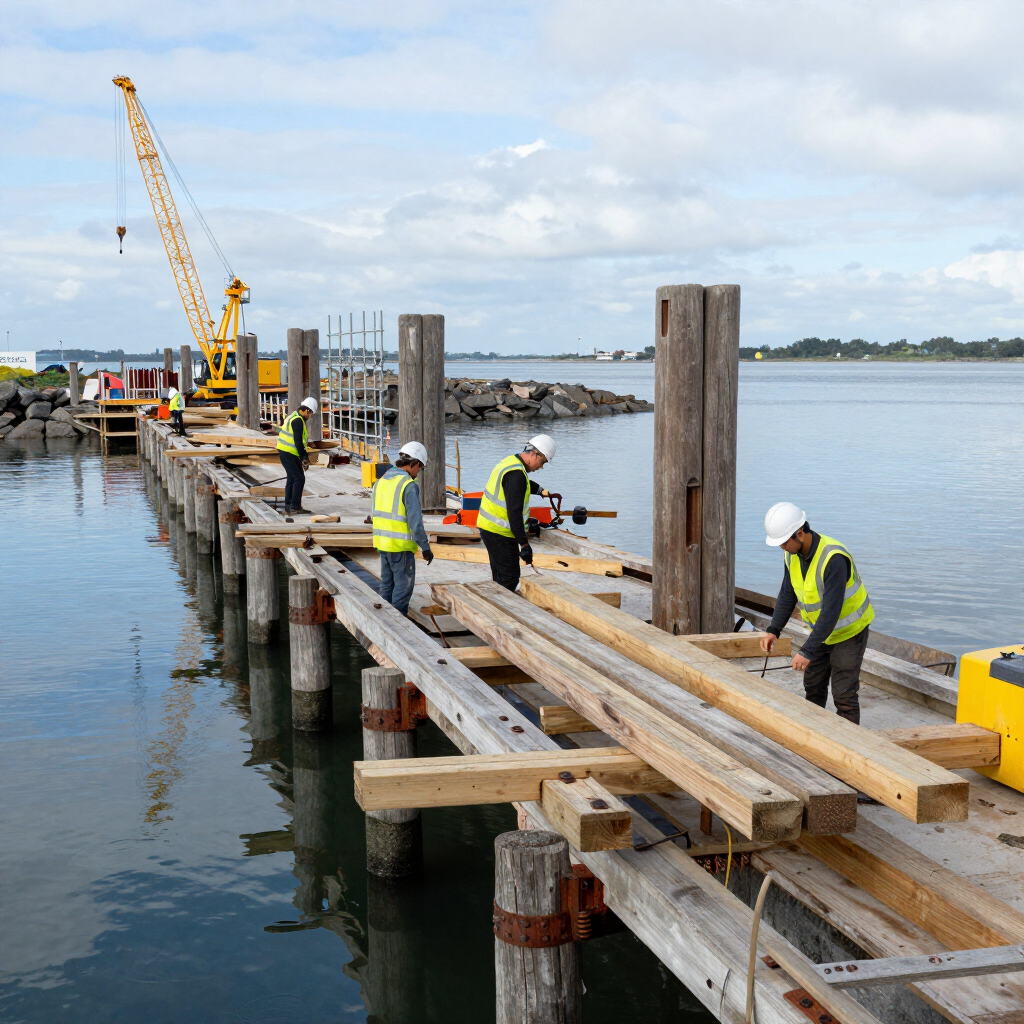
A bulkhead (sometimes called a seawall or retaining wall) is a hard, vertical structure built at the water's edge to hold back soil and resist wave erosion. In Southern Maryland, bulkheads are typically constructed from timber, vinyl, or steel sheeting driven into the ground along the shoreline.
They create a defined, firm boundary between your land and the water, and for properties with steep banks, heavy boat traffic, or high wave exposure, they've historically been the go-to solution.
Bulkheads work well when:
- Your property faces high wave energy (open Bay exposure, heavy boat wakes)
- You need a hard edge for dock access or boat storage
- Your bank is steep and actively eroding
- You have structures close to the water's edge that need immediate protection
The trade-offs to know:
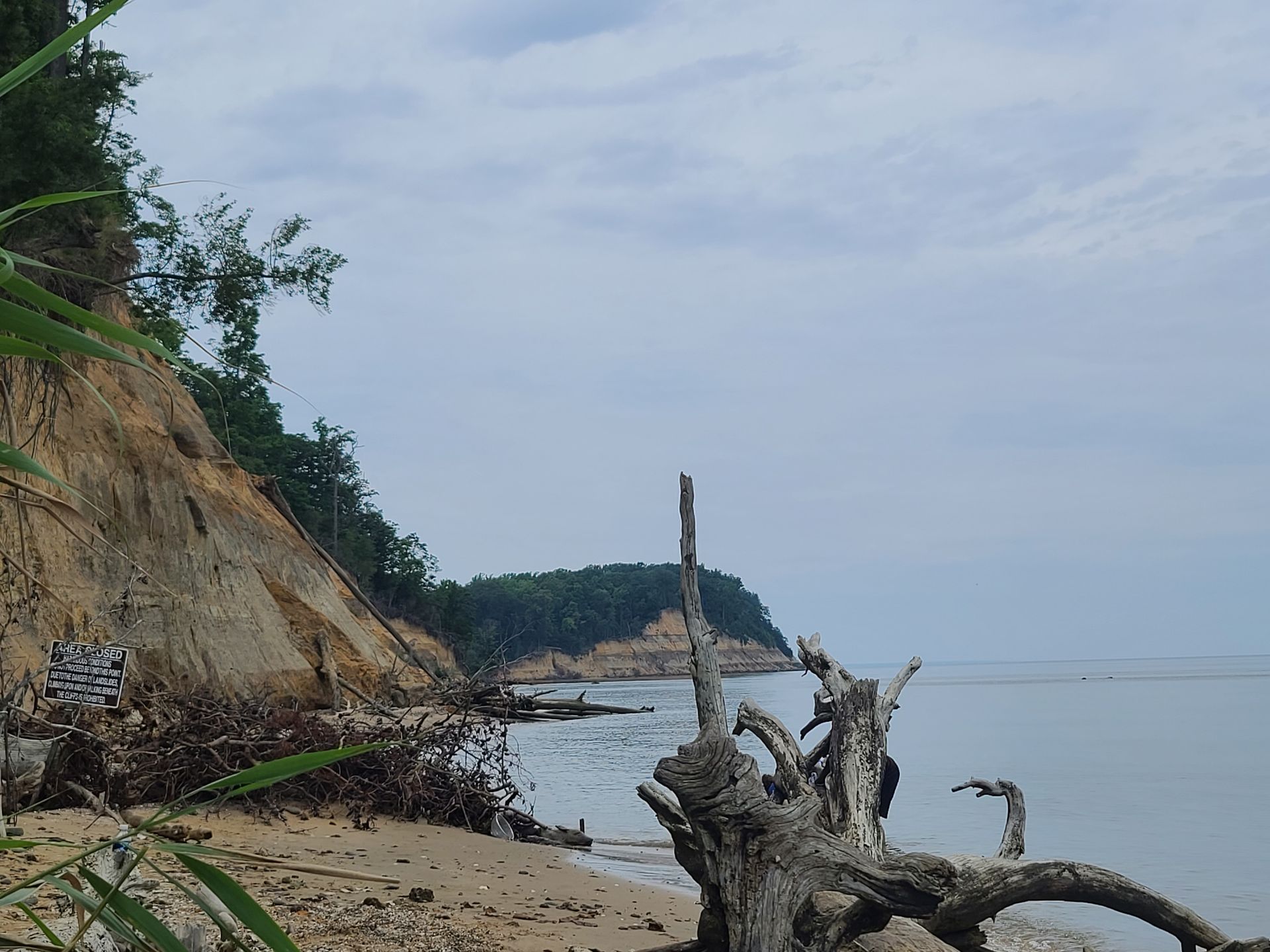
Bulkheads don't last forever. Timber versions typically need replacement every 15–25 years. Vinyl and steel last longer but are significantly more expensive upfront. More importantly, hard structures reflect wave energy rather than absorbing it — which can accelerate erosion of neighboring shorelines and scour sediment from the underwater bottom in front of your property.
From a regulatory standpoint, Maryland has tightened its stance on bulkhead replacement. The Chesapeake Bay Foundation and state agencies now scrutinize "re-armoring" projects and encourage living shoreline alternatives wherever feasible. If you're replacing an existing bulkhead, you'll need to file a Joint Permit Application through the Maryland Department of the Environment (MDE) and may be required to consider natural alternatives first.
What Is a Living Shoreline?
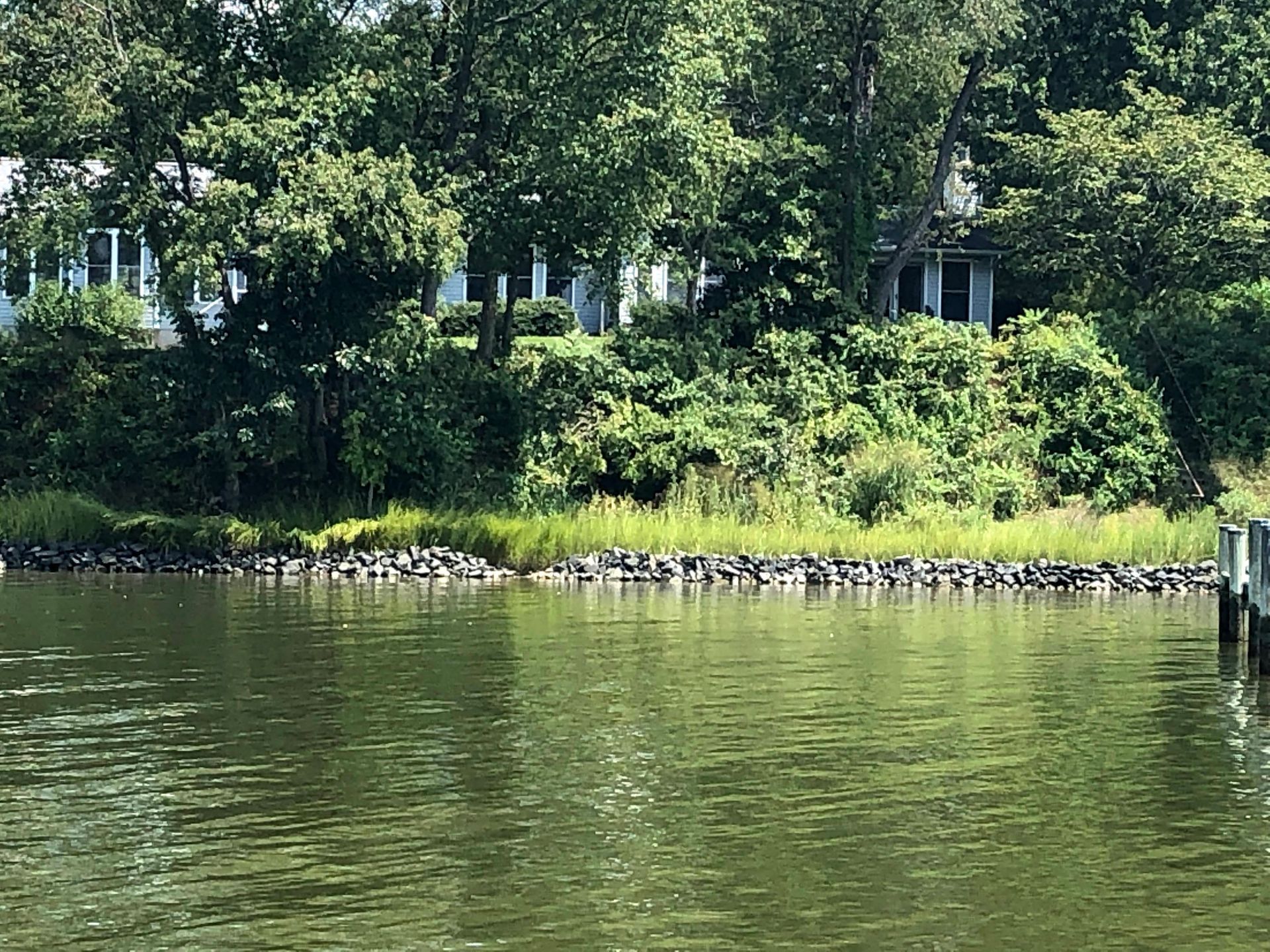
A living shoreline uses natural materials — marsh grasses, native plants, oyster shells, sand, and in some cases a low rock or oyster reef sill — to stabilize the shoreline while maintaining the ecological function of a natural marsh edge.
Rather than walling off the water, a living shoreline works with the water. The vegetation absorbs wave energy. Plant roots bind soil and resist erosion. Organic material builds over time, actually growing the shoreline rather than just defending it.
Ward's Marine has installed living shorelines throughout Southern Maryland, and what we consistently see is that well-designed living shorelines outperform expectations — especially in the lower-energy tidal creek and river environments that dominate much of Calvert, St. Mary's, and Charles County.
Living shorelines work well when:
- Your property has low to moderate wave energy (tidal creeks, rivers, coves, protected Bay shoreline)
- You want a long-term, lower-maintenance solution
- You're dealing with gradual erosion rather than an acute emergency
- You want to maintain or restore the natural character of your waterfront
- You're open to Maryland's financial assistance programs (see below)
The trade-offs to know:
Living shorelines require patience. Marsh grasses take a season or two to fully establish, and during that window your shoreline may not look "finished." They also aren't the right solution for every property — high-energy, exposed coastlines with significant wave action may still require some hardened component, or a hybrid approach combining rock sill protection with planted marsh behind it.
Cost Comparison: Living Shoreline vs. Bulkhead
This is where many homeowners are surprised.
Traditional bulkheads and revetments in Maryland typically cost $500 to $1,200 per linear foot installed. A 100-foot shoreline project can run $50,000 to $120,000 or more depending on materials, site conditions, and permitting complexity.
Living shorelines generally run $150 to $500 per linear foot, making them substantially less expensive for comparable linear footage — often 50% less.
The long-term cost picture favors living shorelines even more dramatically. After Hurricanes Irene (2011) and Arthur (2014), research found that property owners with bulkheads reported roughly double the repair costs from hurricane damage and four times the annual maintenance expense compared to property owners with living shorelines. Hard structures require ongoing maintenance — re-driving posts, sealing joints, replacing rotted timber, repointing mortar. A healthy marsh edge, once established, largely maintains itself.
Maryland's Living Shoreline Incentives
Maryland actively incentivizes living shorelines, and Southern Maryland property owners are eligible for several programs worth knowing about:
Maryland's Shoreline Conservation Service offers 0% interest loans for living shoreline installation. The program, established in 1964, provides technical and financial assistance to waterfront property owners experiencing erosion. Individuals, groups of homeowners, nonprofits, and municipalities are all eligible.
The Maryland Department of Natural Resources lists living shorelines as the preferred erosion control method for most tidal shorelines in the state. This matters for permitting — living shoreline projects typically move through the approval process faster and with fewer hurdles than hardened alternatives.
Grants through the Chesapeake and Atlantic Coastal Bays Trust Fund are periodically available for shoreline restoration projects, with applications open to local governments and organizations.
If cost has been your hesitation about a living shoreline, it's worth asking Ward's Marine about what financial assistance options may be available for your specific project before making a decision.
The Regulatory Reality in Maryland
This is a piece that can genuinely affect your timeline and cost: Maryland's regulatory environment has shifted meaningfully toward living shorelines over the past decade, and that trend is continuing.
Under the Chesapeake Bay Critical Area Act, any work within 1,000 feet of tidal waters requires compliance with Critical Area regulations. For bulkhead replacement specifically, MDE now requires a Bulkhead Replacement Buffer Management Plan as part of a complete Joint Permit Application — a document that details any vegetation removal and required replanting.
The Chesapeake Bay Foundation has actively lobbied Maryland's General Assembly to require closer scrutiny of waiver requests in areas with existing bulkheads, with the explicit goal of converting re-armoring projects into living shoreline projects wherever feasible.
This doesn't mean bulkheads are off the table. It means the permitting process is more demanding, and properties that qualify for living shorelines may face friction if they insist on hardened solutions. Working with an experienced marine contractor who understands the Maryland permitting landscape — and can manage the Joint Permit Application process on your behalf — is increasingly important.
Ward's Marine handles all permitting in-house, including MDE applications, Critical Area reviews, and Army Corps of Engineers coordination. We have an AutoCAD designer on staff so there's no need for third-party engineers, which speeds up the process and keeps costs down.
Which Is Right for Your Southern Maryland Property?
Here's a practical framework:
Choose a living shoreline if:
- Your shoreline is on a tidal creek, river, or protected cove
- Wave energy is low to moderate
- You're dealing with gradual, chronic erosion
- Budget is a factor and you want the most cost-effective long-term solution
- You want to take advantage of Maryland's financial assistance programs
- You value the natural appearance and ecological benefits
Choose a bulkhead if:
- Your property has severe wave exposure or a high-energy shoreline
- You have a steep, actively eroding bank that needs immediate structural stabilization
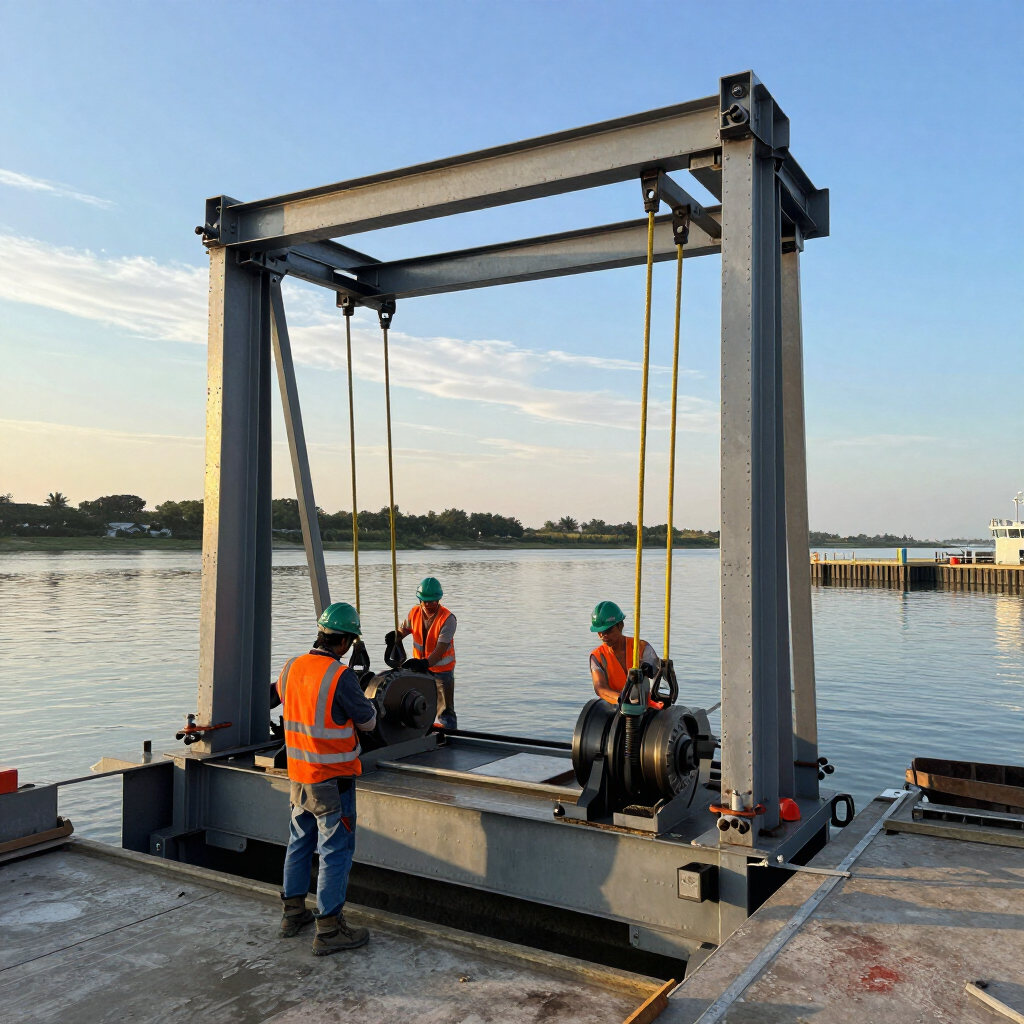
- You need a hard edge for a working dock, boat ramp, or marine facility
- Structures or utilities are close to the water's edge and at immediate risk
Consider a hybrid approach if:
- Your property has moderate wave exposure
- You want some hard protection but want to preserve natural character
- A low oyster shell or rock sill offshore could reduce wave energy enough to allow planted marsh behind it
Ward's Marine designs and builds all three. We've worked on shorelines across Calvert, St. Mary's, and Charles County — from quiet creeks off the Patuxent to exposed Bay-facing properties — and there's no one-size-fits-all answer. What we can do is walk your shoreline with you, assess the conditions honestly, and tell you what will actually work.
The Bottom Line
Both living shorelines and bulkheads are legitimate tools for protecting Southern Maryland waterfront property. The right choice comes down to your specific shoreline conditions, your budget, your long-term plans, and — increasingly — what Maryland's permitting environment will support.
What hasn't changed is the urgency. Shoreline erosion doesn't pause while you're deciding. Every storm season without protection is another few inches of your property that doesn't come back.
Ready to figure out what's right for your waterfront? Contact Ward's Marine Construction for a free consultation. We'll come to your property, assess your shoreline, and give you an honest recommendation — not just the one that's easiest to sell.
📞 (410) 326-4116 🌐 wardsmarineinc.com 📍 200 Wards Rd., Solomons, MD 20688
Ward's Marine is a licensed Maryland Marine Contractor (MMCL# 017), MMCA Member, and State Home Builder serving Calvert County, St. Mary's County, Charles County, and throughout Maryland.
Related reading: Living Shoreline Services | Bulkheads | Shoreline Protection | Request a Free Quote